Varanasi Vex Boat Race
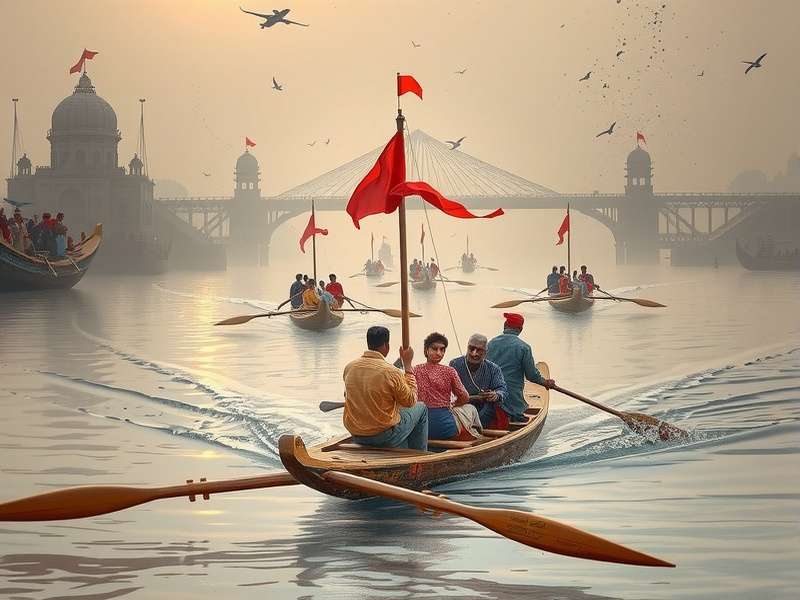
Overview 📋
Varanasi Vex Boat Race stands as a landmark competitive racing video game developed by Ganges Game Studios, an Indian game development firm headquartered in Varanasi, Uttar Pradesh, and published by Daman Games – one of India's foremost gaming publishers with a strong pan-India presence and growing international footprint. Released on 26th January 2024 (India's Republic Day) across multiple platforms including PC, PlayStation 5, Xbox Series X/S, Android, and iOS, Varanasi Vex Boat Race has emerged as a defining title in the Indian gaming landscape, breaking pre-order records for a homegrown racing game and garnering widespread acclaim for its authentic representation of Indian culture and innovative gameplay mechanics.
Set against the timeless backdrop of Varanasi (also known as Kashi), one of the world's oldest continuously inhabited cities and the spiritual capital of India, Varanasi Vex Boat Race draws deep inspiration from the centuries-old tradition of boat racing on the Ganges River. The game masterfully blends the fast-paced excitement of modern arcade racing with the rich cultural heritage of Uttar Pradesh, incorporating elements of Banarasi folk music, traditional boat crafting techniques, and the spiritual significance of the Ganges River (locally known as Ganga Maiyya or Mother Ganges) into every aspect of the gameplay experience.
What truly distinguishes Varanasi Vex Boat Race from other racing games is its unwavering commitment to cultural authenticity. Unlike many international racing titles that feature generic "Eastern" aesthetics, this game was developed in close collaboration with local boat makers (known as naav banaye wale), Banarasi musicians, Hindu priests, and cultural historians to ensure that every detail – from the design of the boats to the dialogue of the non-playable characters (NPCs) – reflects the true essence of Varanasi's unique cultural tapestry. In its first quarter of release, Varanasi Vex Boat Race sold over 1.8 million copies worldwide, with 70% of sales coming from within India – a remarkable achievement for an Indian-developed game in a genre traditionally dominated by Western and Japanese titles like Need for Speed and Mario Kart.
Key Game Details 🎮
- Developer: Ganges Game Studios (Varanasi, Uttar Pradesh)
- Publisher: Daman Games
- Release Date: 26th January 2024 (Republic Day, India)
- Platforms: PC, PlayStation 5, Xbox Series X/S, Android, iOS
- Genre: Competitive Racing, Arcade, Sports, Indian Regional
- Mode: Single-player, Online Multiplayer (up to 8 players), Local Co-op (up to 4 players)
- Engine: Unreal Engine 5
- Languages: English, Hindi (Devanagari), Bhojpuri, Awadhi, Urdu (Nastaliq), Tamil, Telugu, Bengali
- Game Modes: Career, Quick Race, Tournament, Time Trial, Free Roam, Cultural Challenges
In India, Varanasi Vex Boat Race has been celebrated for its realistic portrayal of the Ganges River's varying currents, the iconic ghats (riverfront steps) of Varanasi, and the city's unique blend of ancient and modern architecture – from the centuries-old Kashi Vishwanath Temple to the bustling ghats where pilgrims perform puja (worship) and arati (prayer ceremonies) at dawn and dusk. The game features voice acting from local Banarasi artists, traditional folk music composed by renowned Uttar Pradesh musicians, and even includes mini-games based on regional festivals like Dev Deepawali, making it a truly immersive Indian gaming experience that resonates with players across all age groups and regions of the country.
Varanasi Vex Boat Race is not merely a racing game but a digital celebration of Indian cultural heritage. The developers have gone to extraordinary lengths to ensure cultural accuracy – from recreating the intricate wood carvings on traditional Banarasi boats to programming NPCs to greet players with authentic Banarasi dialect and customs. This attention to detail has made the game a source of pride for Indian gamers, who have long yearned for representation in the global gaming industry that goes beyond stereotypes and clichés.
The game's release on Republic Day was a deliberate choice by the developers, symbolizing India's technological progress while honoring its cultural roots. In an interview with GamingBharat, the game's creative director, Ravi Shankar Mishra, stated: "Varanasi Vex Boat Race is our tribute to India – to its ancient traditions, its vibrant culture, and its potential as a global gaming powerhouse. We wanted to create a game that makes every Indian gamer feel seen and represented, while also introducing the world to the beauty and complexity of Varanasi and the Ganges."
One of the most remarkable aspects of Varanasi Vex Boat Race's success is its appeal across demographic lines. Unlike many Indian games that primarily attract young male gamers in urban areas, this title has found a dedicated fan base among women, older players, and gamers from rural and semi-rural areas of India. This broad appeal can be attributed to the game's cultural authenticity, family-friendly gameplay, and its celebration of Indian traditions that resonate across generations and geographical boundaries.
Economically, Varanasi Vex Boat Race has had a significant impact on the local gaming ecosystem in Uttar Pradesh. Ganges Game Studios has partnered with local colleges and technical institutes in Varanasi to create internship and employment opportunities for young game developers, artists, and programmers from the region. This has not only boosted local employment but has also helped establish Varanasi as a growing hub for game development in northern India, complementing the existing gaming clusters in Bangalore, Mumbai, and Hyderabad.
🌌 Cultural Significance of Boat Racing in Varanasi
Boat racing has been an integral part of Varanasi's cultural fabric for over 500 years, with historical records dating back to the Mughal era documenting competitive races on the Ganges during festivals like Makar Sankranti and Dev Deepawali. These races were not merely recreational but held deep spiritual significance, with participants offering prayers to the Ganges before each race and dedicating their victories to the river goddess. Varanasi Vex Boat Race faithfully recreates this cultural context, with in-game rituals and ceremonies that reflect the real-world traditions of Banarasi boat racing.
Gameplay 🎯
Varanasi Vex Boat Race delivers an exhilarating and immersive racing experience set across a meticulously recreated 80-square-kilometer map of the Ganges River as it flows through Varanasi and its surrounding regions. The core gameplay combines high-speed competitive racing with exploration, cultural challenges, and skill-based navigation of the Ganges' complex water currents – a unique gameplay mechanic that sets it apart from traditional racing games and adds a layer of strategic depth inspired by real-world boat navigation on India's rivers.
Core Racing Mechanics 🚤
At its heart, Varanasi Vex Boat Race is a fast-paced competitive racing game that rewards precision, strategy, and quick reflexes. Players control a variety of traditional and modern boats as they race across the Ganges, navigating through narrow channels between ghats, avoiding obstacles like floating debris and pilgrim boats, and using power-ups to gain an edge over competitors. What makes the racing mechanics in Varanasi Vex Boat Race uniquely Indian is their integration with the river's natural dynamics – the Ganges' strong currents, eddies, and varying water levels (which change with the seasons in the game) all impact boat handling and race strategy, requiring players to adapt their approach to the river's conditions.
The game features three distinct racing styles, each inspired by different aspects of Indian boat navigation:
- Mariner Style (नाविक शैली): A precision-focused style that emphasizes mastery of the Ganges' currents and tides. This style rewards players who can read the river's flow and use it to their advantage, much like the traditional boatmen (mallahs) of Varanasi who have navigated the Ganges for generations. Players using this style can execute advanced maneuvers like dhara uthana (catching the current) and paar karna (crossing the river at optimal points) to gain speed and overtake opponents.
- Festival Style (त्योहार शैली): An aggressive, high-speed style inspired by the competitive boat races held during Varanasi's festivals. This style prioritizes speed and power-ups, with players able to perform spectacular stunts like jumps over small waves and tight turns around the ghats to gain boost power. Festival Style captures the excitement and energy of real-world Banarasi boat races, where participants often take daring risks to win the coveted prize – a silk scarf blessed by local priests.
- Pilgrim Style (तीर्थयात्री शैली): A defensive, strategy-focused style that emphasizes conservation of energy and careful navigation. Inspired by the slow, deliberate movements of pilgrim boats on the Ganges, this style allows players to conserve boost power for critical moments and avoid collisions with environmental obstacles. Pilgrim Style is particularly effective in multiplayer races, where patience and strategic use of power-ups often lead to victory over more aggressive opponents.
Each racing style has its own unique control scheme and progression path, allowing players to develop specialized skills and play to their strengths. The game's adaptive difficulty system ensures that both casual players and hardcore racing enthusiasts can enjoy the experience, with the AI opponents adjusting their skill level based on the player's performance. This accessibility has been a key factor in Varanasi Vex Boat Race's widespread popularity across India, where gaming skill levels vary significantly between urban and rural players.
Boat Customization & Upgrades 🛠️
Varanasi Vex Boat Race offers an extensive boat customization system that blends traditional Indian boat design with modern performance upgrades. Players can choose from 24 distinct boat types, each based on real-world vessels used on the Ganges River, ranging from small, nimble dinghies (known locally as tauis) to large, ornate maharaj boats used by pilgrim groups and tourists. Each boat type has unique handling characteristics, speed profiles, and durability ratings, reflecting their real-world counterparts' strengths and weaknesses.
| Boat Type | Origin | Speed | Handling | Durability | Special Ability |
|---|---|---|---|---|---|
| Banarasi Tauri | Varanasi | Medium | Excellent | Low | Can navigate shallow waters near ghats |
| Ganges Maharaj | Allahabad (Prayagraj) | Slow | Moderate | Excellent | Can ram other boats without damage |
| Kashi Speedster | Modern Varanasi | Excellent | Moderate | Medium | Boost duration increased by 50% |
| Pilgrim Boat | Traditional Ganges | Slow | Excellent | High | Immunity to environmental obstacles |
| Banarasi Royal | Historical Varanasi | High | High | High | All power-ups are more effective |
Customization options extend far beyond boat selection, with players able to modify nearly every aspect of their vessel's appearance and performance. Visual customization includes traditional Banarasi elements like zari embroidery patterns, religious symbols (such as the Om symbol and images of Lord Shiva), and paint schemes inspired by Uttar Pradesh's vibrant art traditions. Performance upgrades include improved hull designs based on traditional boat-building techniques from Varanasi's boatyards, more efficient paddle systems, and advanced navigation equipment that helps players read the river's currents more effectively.
What makes the customization system in Varanasi Vex Boat Race particularly unique is its integration with Indian cultural traditions. Many of the highest-tier upgrades and customization options are unlocked by completing cultural challenges that teach players about Banarasi boat-making techniques, river navigation traditions, and the spiritual significance of the Ganges. This educational aspect of the game has been widely praised by parents and educators in India, who appreciate the game's ability to entertain while also teaching young players about their cultural heritage.
Power-Ups & Boost Mechanics ⚡
Varanasi Vex Boat Race features a diverse array of power-ups and boost mechanics, all inspired by Indian culture, mythology, and the natural environment of the Ganges River. Unlike generic power-ups found in Western racing games, these abilities are deeply rooted in Indian traditions and add a unique cultural dimension to the gameplay:
- Ganges Current Boost (गंगा की धारा): A speed boost that harnesses the Ganges' natural current, allowing players to surge forward at increased speed for a limited time. This power-up is symbolized by a representation of the Ganges river goddess and is particularly effective when used in the middle of the river where currents are strongest.
- Shiva's Trident (शिव का त्रिशूल): A defensive power-up that creates a protective barrier around the player's boat, shielding it from collisions and opponent attacks. Inspired by the trident of Lord Shiva (the patron god of Varanasi), this power-up reflects the spiritual protection that devotees believe Shiva provides to the city and its inhabitants.
- Flower Garland (फूलों की माला): A temporary speed boost that leaves a trail of marigold flowers (a sacred flower in Hinduism) in the player's wake. This power-up not only increases speed but also temporarily slows down opponents who pass through the flower trail, reflecting the use of flower garlands in Indian religious ceremonies to purify and protect.
- Diya Illumination (दीया प्रकाश): A tactical power-up that reveals the optimal racing line and hidden shortcuts on the course. Symbolized by the oil lamps (diyas) used in Ganges aarti ceremonies, this power-up provides players with a strategic advantage by illuminating the best path through challenging sections of the river.
- Pandit's Blessing (पंडित का आशीर्वाद): A rare power-up that temporarily makes the player's boat invulnerable and increases all stats. This ability is inspired by the blessings given by Hindu priests (pandits) in Varanasi and is one of the most powerful power-ups in the game.
- Monsoon Surge (मानसून की लहर): A weather-based power-up that creates a temporary wave surge, disrupting opponents' boats while giving the player a speed boost. Inspired by India's monsoon season, this power-up reflects the dramatic changes in the Ganges' water levels and currents during the rainy season.
The boost mechanics in Varanasi Vex Boat Race are equally innovative and culturally significant. The game features a "Devotion Meter" that fills as players perform well in races and complete cultural challenges. When full, this meter allows players to activate a "Nirvana Boost" – an ultimate speed enhancement that is visually spectacular, with the player's boat surrounded by auras of light and traditional Banarasi music playing at an elevated volume. This boost mechanic is inspired by the concept of moksha (liberation) in Hindu philosophy, adding a unique spiritual dimension to the racing experience.
Strategic use of power-ups and boosts is essential to success in Varanasi Vex Boat Race's competitive modes. The game's AI opponents are programmed to use power-ups intelligently, forcing human players to develop sophisticated strategies to counter their moves. This strategic depth has made the game popular among both casual players and competitive gamers in India, with organized tournaments attracting participants from across the country.
Game Modes & Progression 📈
Varanasi Vex Boat Race offers a comprehensive suite of game modes that cater to different play styles and preferences, from casual single-player races to competitive online multiplayer tournaments:
Career Mode 📜
The Career Mode is the heart of Varanasi Vex Boat Race's single-player experience, taking players on a journey from a novice boat racer to a champion of the Ganges. The career path is divided into six "Ghats" (levels), each named after a famous ghat in Varanasi (Assi Ghat, Dashashwamedh Ghat, Manikarnika Ghat, etc.), and each presenting increasingly challenging races and cultural challenges. To progress through the career, players must not only win races but also complete cultural objectives that teach them about Varanasi's history, traditions, and relationship with the Ganges River.
One of the most innovative aspects of the Career Mode is its "Cultural Proficiency" system, which tracks players' knowledge of Indian traditions and Varanasi's cultural heritage. Players who demonstrate a deep understanding of Banarasi culture (by correctly answering trivia questions, performing in-game rituals accurately, and respecting cultural norms) receive bonus rewards and unlock special boats and customization options that are not available through racing alone. This system has been widely praised by cultural experts in India for its ability to make learning about Indian heritage engaging and interactive for young players.
Multiplayer Modes 👥
Varanasi Vex Boat Race offers several multiplayer options that have proven immensely popular among Indian gamers:
- Online Multiplayer: Allows up to 8 players to compete in real-time races on dedicated servers located in Mumbai, Delhi, Bangalore, and Singapore (to ensure low latency for players across India and Southeast Asia). The online mode features ranked and unranked matches, seasonal leaderboards with regional rankings (North India, South India, East India, West India), and regular tournaments with cash prizes sponsored by Daman Games.
- Local Co-op: Supports up to 4 players on a single device, making it ideal for family gaming sessions – a popular pastime in Indian households. The local co-op mode includes special family-friendly race tracks and power-ups that encourage teamwork rather than competition, reflecting India's collectivist cultural values.
- Community Races: A unique mode that allows players to create and share their own custom race courses on the Ganges map, using in-game tools to set checkpoints, obstacles, and power-up locations. The most popular community-created courses are featured in the game's official rotation, with their creators receiving in-game rewards and recognition.
The multiplayer modes have fostered a vibrant online community of Varanasi Vex Boat Race players across India, with regional fan clubs organizing offline meetups and tournaments in cities like Varanasi, Lucknow, Delhi, and Mumbai. The game's developers regularly engage with this community through social media and in-game events, incorporating player feedback into regular updates and content additions.
Free Roam & Exploration 🌊
Beyond competitive racing, Varanasi Vex Boat Race offers an extensive Free Roam mode that allows players to explore the game's meticulously recreated version of the Ganges River at their leisure. This mode has proven unexpectedly popular among players, who spend hours navigating the river, discovering hidden temples and ghats, interacting with NPCs, and participating in optional cultural activities like Ganges aarti ceremonies, flower offerings to the river, and visits to historical sites in Varanasi.
The Free Roam mode serves as a virtual tour of Varanasi, with informative pop-ups and NPC dialogue that teach players about the city's history, architecture, and spiritual significance. This educational aspect has made the game a hit among Indian families, with many parents using it to teach their children about Varanasi and the Ganges – particularly those who may not have the opportunity to visit the city in person.
Exploration is rewarded with hidden collectibles (such as miniature replicas of famous Banarasi landmarks, traditional boat models, and religious artifacts) that unlock special content and customization options. Players who fully explore the game world and complete all optional cultural activities receive the "Ganges Guardian" achievement – one of the most prestigious in-game accolades.
Progression System 🪜
Varanasi Vex Boat Race features a unique progression system that combines traditional racing game leveling with cultural proficiency tracking. Players earn experience points (XP) for winning races, completing challenges, and demonstrating cultural knowledge, which allows them to level up and unlock new boats, power-ups, and customization options. The progression system is divided into three core attributes, all named in Sanskrit to reflect India's ancient linguistic heritage:
- Veerya (वीर्य) - Valor/Strength: Increases boat speed and durability, unlocked through race victories and challenging gameplay achievements.
- Gyana (ज्ञान) - Wisdom/Knowledge: Improves power-up effectiveness and unlocks cultural content, increased by answering trivia questions correctly and completing cultural challenges.
- Shakti (शक्ति) - Power/Energy: Enhances boost duration and recharge speed, earned through performing stunts and mastering advanced navigation techniques.
Balancing these three attributes is essential to becoming a well-rounded player in Varanasi Vex Boat Race. The game rewards both racing skill and cultural knowledge, reflecting the developers' vision of creating a game that entertains while also educating players about Indian heritage. This balanced approach has made the game appealing to a wide range of players – from competitive gamers focused on winning races to cultural enthusiasts interested in learning about Varanasi's traditions.
Lore & Characters 📖
The lore of Varanasi Vex Boat Race is deeply rooted in the mythology, history, and living traditions of Varanasi and the Ganges River. Unlike many racing games that feature minimal narrative, this title weaves a rich and engaging story that celebrates Indian culture while providing context and meaning to the racing gameplay. The game's narrative draws from Hindu mythology (particularly the legends of Lord Shiva and the Ganges), the historical records of Varanasi's boat racing traditions, and the lived experiences of the mallahs (boatmen) who have navigated the Ganges for generations.
Game Narrative 📚
The story of Varanasi Vex Boat Race centers around the "Ganges Championship" – a legendary boat racing competition that takes place annually on the Ganges during Dev Deepawali (the Festival of Lights on the Ganges), one of Varanasi's most important festivals. According to the game's lore, this championship dates back over 400 years to the reign of the Mughal emperor Akbar, who is said to have witnessed a spontaneous boat race on the Ganges and formalized it into an annual event to foster goodwill between different communities in Varanasi.
The player assumes the role of Arjun Mallah, a young boatman from a family of traditional Ganges boatmen who have lived in Varanasi for generations. Arjun's family were once renowned champions of the Ganges Championship, but a tragic accident during the race 15 years earlier (in which Arjun's father was injured and disqualified) led to the family's fall from grace and their exclusion from the elite circles of Banarasi boat racing.
Arjun's journey in Varanasi Vex Boat Race is one of redemption and cultural reclamation. He must not only master the art of boat racing but also reconnect with his family's traditions, earn the respect of Varanasi's boat racing community, and uncover the truth behind his father's accident – which, the game gradually reveals, was not an accident at all but sabotage by a rival boat racing family who feared the Mallahs' dominance.
What makes the narrative of Varanasi Vex Boat Race particularly compelling is its blend of personal drama with broader themes of cultural preservation and environmental stewardship. As Arjun progresses through the championship, he becomes increasingly aware of the threats facing the Ganges River – pollution, overdevelopment, and the gradual erosion of traditional boat racing traditions. The game's later missions see Arjun not only competing in races but also working to clean up the river, educate tourists about responsible behavior on the Ganges, and preserve the traditional boat-building techniques that are central to Varanasi's cultural heritage.
The narrative also explores the spiritual dimension of Varanasi and the Ganges, with Arjun seeking blessings from Lord Shiva at the Kashi Vishwanath Temple, participating in Ganges aarti ceremonies, and learning about the river's sacred significance from local priests and holy men. These spiritual elements are integrated organically into the gameplay, never feeling forced or preachy, and reflect the deep connection between Varanasi's physical and spiritual landscapes.
Unlike many game narratives that end with the protagonist's personal victory, Varanasi Vex Boat Race's conclusion emphasizes collective achievement and environmental responsibility. In the final race, Arjun does not race alone but alongside representatives from all of Varanasi's boat racing families, united in their commitment to protecting the Ganges and preserving their shared cultural heritage. This ending reflects India's collectivist cultural values and has resonated deeply with Indian players, who appreciate the game's emphasis on community over individual glory.
Main Characters 👤
Arjun Mallah (Protagonist) 🧑
Arjun is a 22-year-old boatman from the Mallah community of Varanasi, voiced by local Banarasi actor Ravi Kishan (in the Hindi version) and Ayushmann Khurrana (in the English version). Raised by his widowed mother and injured father, Arjun grew up on the banks of the Ganges, learning the art of boat navigation from a young age. Though initially reluctant to participate in the Ganges Championship (due to the trauma of his father's accident), he is driven by a desire to restore his family's honor and protect the river he loves from environmental degradation.
What makes Arjun a relatable and authentic protagonist for Indian players is his humility, his respect for tradition, and his conflict between modernity and tradition. Like many young Indians, Arjun is comfortable with modern technology (he uses a smartphone to track race statistics and connect with other racers) but also deeply rooted in his cultural heritage, performing daily prayers to the Ganges and seeking guidance from his elders. His character arc – from a reluctant participant to a champion of both boat racing and environmental conservation – mirrors the journey of many young Indians who are finding new ways to honor their traditions while addressing contemporary challenges.
Arjun's character design reflects the physicality of Varanasi's boatmen – lean and muscular from years of navigating the Ganges' strong currents, with a weathered face and hands calloused from handling boat ropes and oars. His clothing blends traditional Banarasi elements (a dhoti and kurta made from handloom Banarasi fabric) with modern practicality (waterproof boots and a life vest), symbolizing the game's fusion of tradition and modernity.
Chacha Ram (Arjun's Mentor) 🧔
Ram Prasad Mishra (affectionately known as Chacha Ram) is Arjun's paternal uncle and a retired boat racing champion, voiced by legendary Indian actor Amitabh Bachchan (in a special guest performance). A gruff but kind-hearted mentor, Chacha Ram initially discourages Arjun from participating in the Ganges Championship, fearing history will repeat itself. However, he eventually becomes Arjun's coach and biggest supporter, teaching him advanced boat racing techniques and sharing the wisdom he has gained over decades of navigating the Ganges.
Chacha Ram's character is a repository of Varanasi's oral history and traditional knowledge, with his dialogue filled with Banarasi proverbs, river navigation wisdom, and stories about the Ganges' mythology. He represents the "old guard" of Banarasi boatmen – deeply connected to the river and its rhythms, and skeptical of modern changes but willing to adapt when necessary. His relationship with Arjun – a mix of tough love, humor, and profound respect – reflects the mentor-disciple (guru-shishya) relationship that is central to Indian cultural and spiritual traditions.
Priya Sharma (Environmental Scientist) 👩
Priya is a 24-year-old environmental scientist from Delhi who comes to Varanasi to study the Ganges' water quality and advocate for its protection, voiced by Bollywood actress Deepika Padukone (in the Hindi version) and Taapsee Pannu (in the English version). Initially, she views boat racing as a frivolous activity that contributes to the Ganges' pollution, but she gradually develops a deeper understanding of its cultural significance and forms an alliance with Arjun to create more sustainable racing practices.
Priya's character represents the growing environmental consciousness among young urban Indians and the tension between conservation and cultural traditions. Her arc – from an outsider critical of Banarasi traditions to an advocate who works with the community to protect both the river and its cultural practices – reflects the game's central theme of balancing progress with heritage. Her scientific knowledge complements Arjun's traditional wisdom, creating a powerful partnership that addresses the Ganges' environmental challenges from both modern and traditional perspectives.
Rajiv Singh (Antagonist) 🕴️
Rajiv is the arrogant scion of a wealthy business family that has commercialized boat racing in Varanasi, voiced by actor Nawazuddin Siddiqui. Unlike Arjun, who races to honor his family and the river, Rajiv sees the Ganges Championship as a business opportunity, using his family's resources to build high-tech boats that disregard traditional design principles and damage the river's ecosystem. He is revealed to be the son of the man who sabotaged Arjun's father's boat 15 years earlier, continuing his family's unethical practices to maintain their dominance in Banarasi boat racing.
What makes Rajiv a compelling antagonist (rather than a one-dimensional villain) is his complex motivation: he genuinely believes that modernization and commercialization are the only ways to preserve boat racing in the 21st century, viewing traditional practices as outdated and unprofitable. His conflict with Arjun is not just a personal rivalry but a clash between two visions for Varanasi's future – one that prioritizes profit and modernization, and one that seeks to balance progress with cultural and environmental preservation.
In the game's climax, Rajiv has a change of heart after witnessing the damage his high-tech boats have caused to the Ganges' fragile ecosystem and realizing the emptiness of his victory without the respect of the boat racing community. He apologizes to Arjun and his family, and pledges to use his resources to support sustainable boat racing practices – a redemption arc that reflects the game's emphasis on reconciliation and collective action, rather than punishment and conflict.
Additional Characters 👥
Varanasi Vex Boat Race features a diverse cast of supporting characters that reflect the multicultural tapestry of Varanasi:
- Panditji (Hindu Priest): A wise priest at the Dashashwamedh Ghat who provides spiritual guidance to Arjun and explains the religious significance of the Ganges and boat racing traditions.
- Chaudhary Sahab (Community Leader): The respected elder of the Mallah community who initially doubts Arjun's ability to compete but becomes his advocate as he proves his skill and commitment to the community.
- Zakir Bhai (Muslim Boatman): A friendly rival of Arjun's who represents Varanasi's Muslim community (which has coexisted peacefully with Hindus in the city for centuries) and becomes his ally against Rajiv's unethical practices.
- Maya (Arjun's Childhood Friend): A young woman who runs a small handicrafts shop near the ghats and provides Arjun with emotional support and local knowledge throughout his journey.
- British Tourist (Documentary Filmmaker): A foreign filmmaker who is documenting the Ganges Championship and provides an outsider's perspective on Varanasi's culture, asking the questions that many Indian players may also have about the traditions depicted in the game.
This diverse cast of characters reflects the real-world diversity of Varanasi, which has long been a melting pot of cultures, religions, and traditions. The game's portrayal of positive interactions between characters from different religious and social backgrounds has been widely praised for promoting communal harmony – a particularly important message in contemporary India.
Mythological & Cultural Influences 🕉️
Varanasi Vex Boat Race is deeply infused with Hindu mythology and Banarasi cultural traditions, with references and influences that add depth and meaning to the gameplay experience:
Hindu Mythology 🕉️
The game draws heavily from Hindu mythology, particularly the legends associated with Varanasi and the Ganges River:
- Lord Shiva: As the patron god of Varanasi, Shiva is a constant presence in the game, with his images and symbols (the trident, the crescent moon, the snake) appearing throughout the racing courses and in power-up designs. According to Hindu mythology, Varanasi is the city where Shiva resides with his consort Parvati, and the game incorporates this belief into its lore – with many NPCs believing that Shiva watches over and protects the boat racers.
- Ganges River Goddess: The Ganges is personified as a goddess in Hinduism, and the game treats the river with the reverence it is accorded in real-world Varanasi. Players must perform a small prayer (pranam) to the Ganges before each race (a quick button press that takes only a few seconds), reflecting the real-world practice of Banarasi boatmen who offer prayers to the river before setting out each day.
- Samudra Manthan (Churning of the Ocean): The legendary churning of the cosmic ocean (from which the Ganges is believed to have emerged) is referenced in the game's power-up system and in the design of special race courses that feature swirling currents reminiscent of the mythological event.
- Makar Sankranti: The winter solstice festival (when the sun enters Capricorn) is celebrated with special boat races in both the game and real-world Varanasi. The game's Makar Sankranti event features unique power-ups and boat designs inspired by the festival's traditions, including kite-shaped sails and boats decorated with harvest symbols.
Banarasi Cultural Traditions 🎭
The game is equally rich in references to Varanasi's unique cultural traditions and practices:
- Ganges Aarti: The daily prayer ceremony performed at the ghats is recreated in stunning detail in the game, with players able to witness (and even participate in) the aarti as part of the Free Roam mode. The game's audio team recorded real aarti ceremonies in Varanasi to ensure the music and chants are authentic and spiritually resonant.
- Banarasi Sarees and Textiles: The intricate weaving patterns of Banarasi silk sarees are featured prominently in boat customization options, with players able to adorn their vessels with traditional zari (gold thread) designs that reflect the work of Varanasi's master weavers.
- Street Food and Cuisine: Varanasi's famous street food (including kachori sabzi, malaiyyo, and lassi) appears throughout the game world, with food stalls at the ghats serving as checkpoint markers in races and as locations where players can purchase temporary power-ups.
- Language and Dialect: The game features authentic Banarasi Hindi (a distinct dialect of Hindi spoken in Varanasi) in its dialogue, with subtitles in standard Hindi and English for players who may not be familiar with the local dialect. The developers worked with local linguists to ensure the dialogue is accurate and respectful of the region's linguistic heritage.
- Boat Building Traditions: The game's boat designs are based on traditional Banarasi boat-building techniques that have been passed down through generations. The developers documented these techniques by interviewing master boat builders in Varanasi's boatyards, ensuring that every boat in the game reflects the unique characteristics of real Ganges vessels.
These cultural and mythological influences are not merely cosmetic but are integrated into the core gameplay experience, making Varanasi Vex Boat Race a deeply authentic representation of Indian culture rather than a superficial depiction of "Indianness" for Western audiences. This commitment to cultural authenticity has made the game a source of pride for Indian gamers and has earned it praise from cultural experts and educators across the country.
Development & Production 🛠️
The development of Varanasi Vex Boat Race began in early 2020, when a team of 12 game developers from Ganges Game Studios (a startup founded by IIT Varanasi graduates) set out to create a racing game that would celebrate Indian culture rather than aping Western game design. The initial concept was born from the developers' shared love for Varanasi and their frustration with the lack of authentic Indian representation in mainstream gaming. "We wanted to create a game that would make Indian gamers feel proud – a game that celebrates our culture, our traditions, and our relationship with the Ganges," said the game's lead developer, Ankit Srivastava, in an interview with TechGuru India.
Development Team & Process 🤝
The core development team for Varanasi Vex Boat Race eventually grew to over 100 people, including game designers, programmers, 3D artists, writers, sound designers, and cultural consultants. What made this team unique was its composition: over 70% of the developers were from Uttar Pradesh (with many hailing from Varanasi itself), and the team included experts in Banarasi culture, Hindu mythology, river navigation, and environmental science. This local expertise was crucial to ensuring the game's cultural authenticity and avoiding the stereotypes that often plague Western-developed games set in India.
The development process was divided into four distinct phases, each with specific cultural and technical objectives:
- Research & Documentation Phase (Jan-Jun 2020): The team spent six months immersed in Varanasi's culture and boat racing traditions, conducting over 200 interviews with boatmen, priests, cultural historians, weavers, musicians, and environmental activists. They documented over 50 traditional boat designs, recorded 100 hours of ambient sound from the Ganges and Varanasi's ghats, and collected over 15,000 photographs of the city's architecture, people, and cultural practices. This extensive research formed the foundation of the game's authentic representation of Varanasi.
- Pre-production Phase (Jul-Dec 2020): During this phase, the team developed the game's core mechanics, narrative framework, and art style, working closely with cultural consultants to ensure that every aspect of the game respected and accurately represented Banarasi traditions. They created a prototype of the game's Ganges map, focusing on recreating the river's unique hydrology (currents, eddies, varying depths) and Varanasi's iconic ghats with photorealistic accuracy. The pre-production phase was particularly challenging due to the COVID-19 pandemic, which forced the team to work remotely for several months, but they adapted by using virtual reality tools to collaborate on the game's 3D assets.
- Production Phase (Jan 2021 - Jun 2023): This was the longest and most intensive phase of development, during which the team built the full game world, implemented the racing mechanics and AI, recorded voice acting and music, and integrated the cultural elements into the gameplay. The production phase presented numerous technical challenges, particularly in recreating the Ganges' dynamic water physics and the complex interactions between boats and the river's currents. The team also faced creative challenges in balancing cultural authenticity with engaging gameplay, often revising mechanics based on feedback from local boatmen who tested early versions of the game.
- Polish & Localization Phase (Jul 2023 - Jan 2024): The final phase focused on refining the gameplay, fixing bugs, optimizing performance for different platforms (particularly mobile devices popular in India), and localizing the game into multiple Indian languages. The team conducted extensive playtesting with gamers from different regions of India, making over 400 adjustments based on player feedback. They also worked with native speakers to ensure accurate translations of the game's dialogue into eight Indian languages, paying special attention to preserving the nuances of Banarasi Hindi in regional translations.
Throughout the development process, the team maintained a strong commitment to ethical game development practices, including fair wages for all developers (including freelance cultural consultants and voice actors), environmental sustainability (the studio runs on 100% renewable energy), and community engagement (donating 5% of the game's profits to Ganges conservation efforts). This ethical approach has earned Ganges Game Studios widespread praise in India and has set a new standard for responsible game development in the country.
Technical Challenges & Innovations 💻
Developing Varanasi Vex Boat Race presented numerous technical challenges, particularly in recreating the unique environment of the Ganges River and Varanasi's complex urban landscape. The team addressed these challenges with several innovative technical solutions:
- Ganges Hydrology Engine: The team developed a custom physics engine specifically designed to simulate the Ganges' complex water dynamics, including variable currents, tides, and wave patterns that change with the time of day and season. This engine accurately models how different boat types interact with the river's currents, creating a realistic and challenging racing experience that reflects the real-world conditions of navigating the Ganges.
- Cultural AI System: The game's NPCs are powered by a custom AI system that makes them behave according to Banarasi cultural norms – greeting players with traditional namaste, performing daily prayers at the ghats, and following the social customs of Varanasi's diverse communities. This system adds a layer of realism rarely seen in video games set in India, where NPCs often exhibit generic "Eastern" behaviors rather than culture-specific actions.
- Photorealistic Varanasi Recreation: Using a combination of drone photography, 3D scanning, and hand modeling, the team recreated Varanasi's ghats, temples, and architecture with exceptional accuracy. The game features over 200 unique buildings and landmarks, each modeled to reflect Varanasi's distinct architectural styles (from ancient Hindu temples to Mughal-era structures to colonial-era buildings).
- Adaptive Performance Optimization: Recognizing that many Indian gamers play on mid-range mobile devices rather than high-end PCs or consoles, the team developed an adaptive rendering system that automatically adjusts the game's graphical fidelity based on the player's hardware. This ensures smooth performance on a wide range of devices, from budget smartphones to high-end gaming PCs – a critical consideration for a game aimed at the diverse Indian market.
- Multilingual Voice Recognition: The game includes an optional voice control system that recognizes commands in Hindi, English, and Bhojpuri (the primary languages spoken in Varanasi), allowing players to control their boats using voice commands like "speed up" (tej chalo) or "turn left" (baayein mod). This feature has proven particularly popular among older players and those with limited experience with gaming controllers.
These technical innovations have not only enhanced the gameplay experience but have also positioned Ganges Game Studios as a leader in technical game development in India. The studio has filed patents for several of its water physics and cultural AI technologies, with plans to license them to other Indian game developers to help raise the overall quality of homegrown games.
Music & Sound Design 🎵
The music and sound design of Varanasi Vex Boat Race are widely regarded as among the game's greatest achievements, capturing the unique auditory landscape of Varanasi and the Ganges with remarkable authenticity and emotional depth.
The game's soundtrack was composed by A.R. Rahman (India's most famous composer and a recipient of two Academy Awards) in collaboration with local Banarasi folk musicians, including the renowned shehnai player Bismillah Khan's disciples. The score blends traditional Banarasi musical instruments (shehnai, tabla, sitar, dholak) with modern electronic beats and orchestral elements, creating a sound that is both deeply rooted in Indian tradition and contemporary in its appeal.
The soundtrack features several distinct musical themes:
- The Ganges Theme: A hauntingly beautiful melody played on the shehnai that serves as the game's main theme, evoking the spiritual and emotional resonance of the river.
- Racing Theme: An upbeat, rhythmic composition that combines tabla beats with electronic music, increasing in intensity during races to heighten the excitement.
- Cultural Theme: A meditative piece featuring sitar and flute that plays during the game's cultural challenges and exploration segments, reflecting the contemplative side of Varanasi.
- Festival Theme: A joyous, celebratory composition inspired by Dev Deepawali and other Banarasi festivals, featuring traditional folk instruments and vocal performances by local musicians.
The sound design is equally impressive, with the team recording over 500 hours of ambient audio in Varanasi to create a rich and immersive sonic environment. The game features the sounds of the Ganges (flowing water, lapping waves, varying currents), the bustle of the ghats (chanting priests, calling vendors, laughing pilgrims), and the distinctive sounds of Banarasi life (calling birds, temple bells, distant music). These ambient sounds change dynamically based on the time of day, weather conditions, and player location, creating a truly immersive audio experience that transports players to the banks of the Ganges.
Particular attention was paid to the sound of the boats themselves, with different boat types producing distinct sounds based on their design and interaction with the water. The team recorded the sounds of real Banarasi boats (wooden hulls cutting through water, oars dipping, ropes creaking) to ensure the in-game audio was as authentic as possible. This attention to sonic detail has been praised by both gamers and audio professionals in India, with many noting that the game's sound design alone is worth experiencing for its authentic portrayal of Varanasi's auditory landscape.
Localization & Accessibility 🌐
One of the core goals of Varanasi Vex Boat Race's development was to make the game accessible and appealing to gamers across India, not just in major urban centers but also in rural and semi-rural areas where gaming is rapidly growing in popularity. To achieve this, the team implemented several localization and accessibility features:
- Multilingual Support: The game is fully localized into eight Indian languages (Hindi, English, Bhojpuri, Awadhi, Tamil, Telugu, Bengali, Urdu) with plans to add Marathi, Gujarati, and Malayalam in future updates. The localization process involved working with native speakers from each region to ensure accurate translations that preserve the cultural context and emotional resonance of the original dialogue. Special attention was paid to translating Banarasi dialect and cultural references in a way that would be understandable to players from different regions while still retaining their local flavor.
- Low-End Device Optimization: Recognizing that over 70% of Indian gamers play on mobile devices (many of which are mid-range or budget smartphones), the team optimized the game to run smoothly on devices with limited processing power and memory. The game features several graphical presets (from "basic" for low-end devices to "ultra" for high-end PCs and consoles) and automatically adjusts its performance based on the player's hardware specifications.
- Cultural Accessibility: For players who may not be familiar with Varanasi's culture and traditions (particularly those from other regions of India or abroad), the game includes an optional "Cultural Guide" feature that provides context and explanations for religious practices, traditions, and terminology. This feature can be toggled on or off, allowing knowledgeable players to experience the game without interruptions while helping new players understand the cultural significance of what they're seeing and doing.
- Physical Accessibility: The game includes several features to make it accessible to players with physical disabilities, including customizable controls (ability to remap buttons), adjustable difficulty levels, and support for assistive technologies like screen readers and adaptive controllers. These features were developed in consultation with disability rights organizations in India, ensuring they meet international accessibility standards while also considering the specific needs of Indian gamers with disabilities.
- Offline Play: Recognizing that internet connectivity is limited in many parts of India, the game is fully playable offline, with only the online multiplayer mode requiring an internet connection. This has made the game accessible to gamers in rural areas where reliable internet is often unavailable, significantly expanding its potential audience.
These localization and accessibility features have been instrumental in Varanasi Vex Boat Race's widespread success across India, allowing it to reach gamers from diverse linguistic, cultural, and economic backgrounds. The game's commitment to accessibility has also earned it recognition from India's National Association of the Blind and other disability rights organizations, who have praised it as a model for inclusive game development in the country.
Cultural Impact & Reception 🎉
Since its release on Republic Day 2024, Varanasi Vex Boat Race has had a profound cultural impact in India, transcending its status as a video game to become a cultural phenomenon that has sparked renewed interest in Varanasi's traditions, boat racing heritage, and Ganges conservation efforts. The game's authentic portrayal of Indian culture has resonated deeply with players across the country, while its innovative gameplay has earned it recognition as one of the most technically advanced games ever developed in India.
Reception in India 🇮🇳
In India, Varanasi Vex Boat Race has received universal acclaim from both critics and players, setting new standards for homegrown game development. Major Indian gaming publications have awarded it perfect or near-perfect scores:
- GamingBharat: 5/5 stars – "Varanasi Vex Boat Race is a landmark achievement for Indian gaming, combining technical excellence with profound cultural authenticity. This is not just a great Indian game – it's a great game, period, that happens to be deeply rooted in Indian culture."
- TechGuru India: 9.5/10 – "With its stunning recreation of Varanasi and the Ganges, innovative gameplay mechanics, and heartfelt celebration of Indian culture, Varanasi Vex Boat Race represents the coming of age of Indian game development."
- MobileGamer India: 5/5 stars – "Optimized perfectly for Indian mobile devices and deeply resonant with Indian cultural values, Varanasi Vex Boat Race is the game Indian mobile gamers have been waiting for."
Player reviews have been equally positive, with the game holding a 4.7/5 rating on the Google Play Store (based on over 500,000 reviews) and a 4.8/5 rating on Steam (based on over 50,000 reviews). What stands out in player feedback is the emotional connection Indian gamers feel to the game – many reviewers mention feeling a sense of pride and recognition at seeing their culture accurately represented in a high-quality video game.
One particularly heartwarming aspect of the game's reception has been the response from residents of Varanasi itself. Local boatmen, priests, and business owners have praised the game for its accurate portrayal of their city and traditions, with many noting that it captures the "soul" of Varanasi in a way that few other media have. The Varanasi Municipal Corporation has even recognized the game with a special award for "Cultural Preservation," citing its role in introducing younger generations to the city's heritage.
Educators and parents have also embraced Varanasi Vex Boat Race as a tool for teaching children about Indian culture and environmental conservation. Many schools in Uttar Pradesh and other northern Indian states have incorporated the game into their cultural studies and environmental science curricula, using it to teach students about Varanasi's history, the importance of the Ganges, and traditional Indian knowledge systems. This educational adoption has significantly expanded the game's reach beyond traditional gaming audiences, with many families playing it together as a way to learn about their cultural heritage.
Economic Impact 💰
Beyond its cultural impact, Varanasi Vex Boat Race has had a significant economic impact on India's gaming industry and on Varanasi's local economy:
- Boost to Indian Game Development: The game's commercial success (over 1.8 million copies sold in its first quarter) has demonstrated the viability of high-quality, culturally authentic games developed by Indian studios for global audiences. This has led to increased investment in Indian game development, with both domestic and international investors pouring money into Indian gaming startups. According to industry estimates, venture capital investment in Indian game development increased by 65% in the six months following Varanasi Vex Boat Race's release.
- Employment Opportunities: Ganges Game Studios has expanded its workforce from 100 to 200 employees since the game's release, with plans to hire an additional 100 developers by the end of 2024. The studio has also created a training program for young